
Most dogs have a great time at the lake. They run on the sand, wade in the shallows, and sleep hard on the drive home. The goal here isn’t to scare you away from bringing them. It’s to point out the handful of things that actually matter, so you can skip the long list of things that don’t.
Not Every Dog Swims the Way You’d Expect
People assume dogs just know how to swim. That’s not always true.
Some dogs paddle confidently the first time they’re in water. Others freeze up or panic, even ones that seem athletic on land.
Don’t assume your dog already knows how to swim. The American Animal Hospital Association advises introducing dogs to water gradually instead.
Start in calm, shallow water. Watch how they respond before letting them go further out.
If your dog is new to the lake, treat the first visit as a test, not a given.
Flat-Faced Breeds Need Extra Care
This is the one fact worth remembering if you own a Bulldog, Pug, Shih-Tzu, or a mixed breed with a short snout.
Brachycephalic breeds tire faster in the water and carry a higher risk overall.
Their flat faces and heavier chests make swimming harder work. AAHA notes this raises the chance of sinking rather than floating.
That doesn’t mean leave them home. It means shorter swim sessions, more breaks, and closer attention than you’d give a Labrador.
A Life Jacket Is Worth It, Even for Confident Swimmers
You don’t need a closet full of gear to have an easy day at the lake. But a life jacket is one place where it pays off.
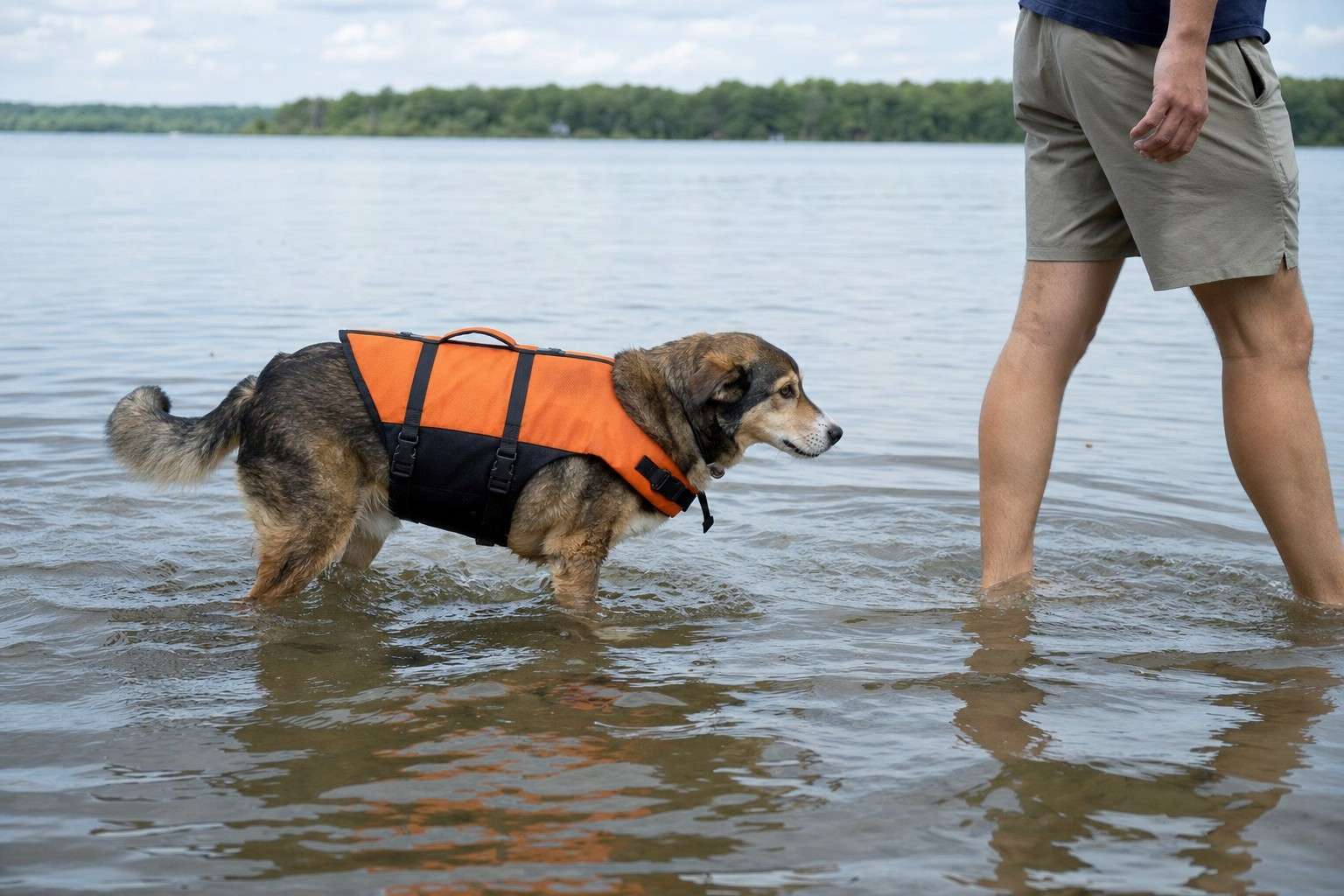
AAHA recommends a properly fitted PFD for any dog that’s a weak swimmer or new to the water. That includes dogs riding along on a boat.
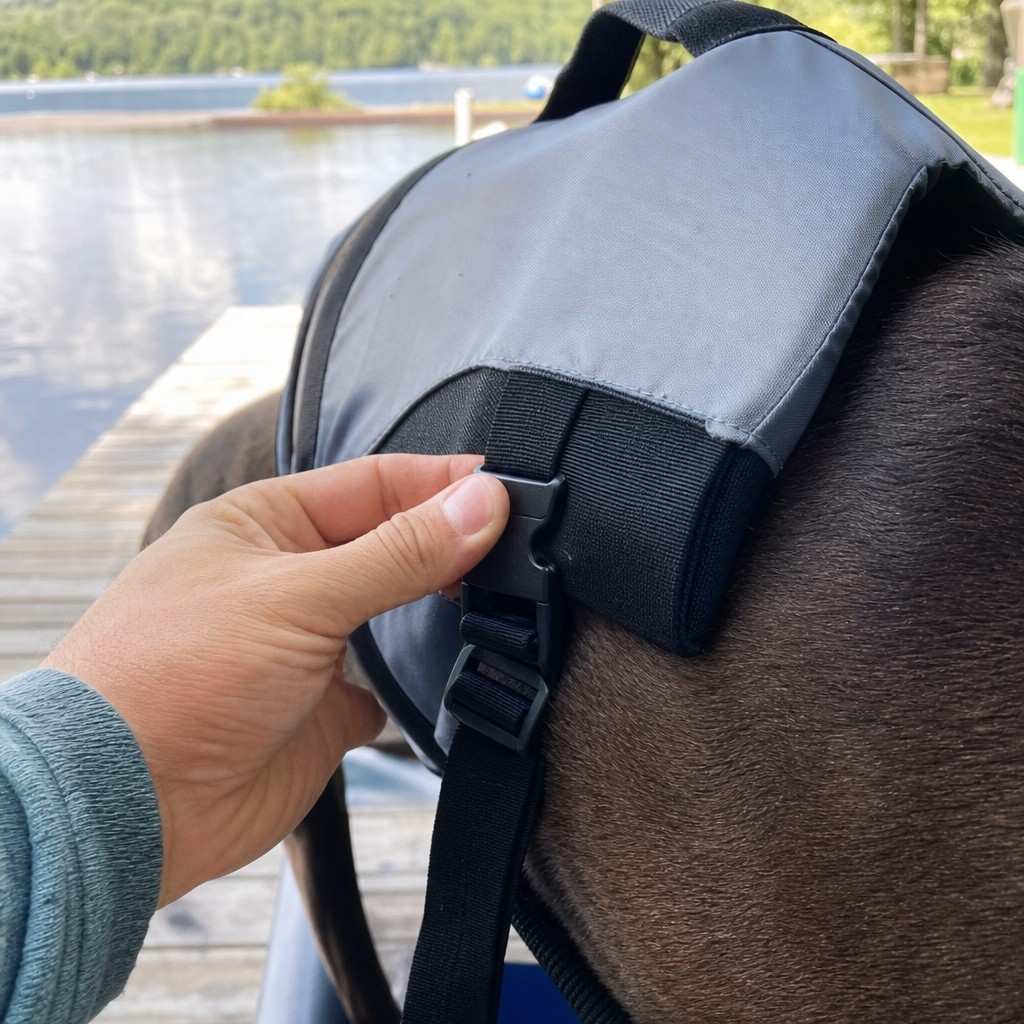
Fit matters more than brand or price. A loose jacket can ride up around the neck instead of supporting the body.
A life jacket that fits is the one thing worth checking every time. Check it the same way you’d check a kid’s before they get in the water.
If you don’t have one yet, you can compare dog life jackets on Amazon to see the range of sizes and styles.
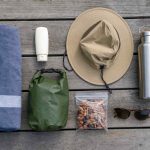
If you’re putting together what to pack for a day at the lake, this is a good one to add. It goes alongside the basics: towels, water, shade, and the rest of a normal day at the lake.
Supervision Matters More Than Any Piece of Gear
Here’s the single biggest factor in dog water safety, and it costs nothing.
Supervision is the most important rule, per AAHA. Never leave a pet unsupervised near a pool, lake, river, or ocean.
Things can go wrong fast and quietly. A dog struggling in water often doesn’t make noise the way people expect.
This is easy to overlook when you’re also watching kids, setting up chairs, or chatting with the group. Someone needs to have eyes on the dog, the same way someone needs eyes on the kids.
If you’re juggling both, a relaxed lake day with kids covers the same groundwork. The dog just shouldn’t be the thing that slips through the cracks.
Skip the Lake Water as a Water Bowl
Dogs get thirsty after running around, and the lake is right there. It’s tempting to let them drink from it.
Don’t let your dog drink lake water. Lake, pond, and river water can carry bacteria, blue-green algae toxins, and parasites that make dogs sick, AAHA notes.
This isn’t a rare edge case. It’s common enough to just pack a water bowl and bottle every time.
Bring more than you think you’ll need. Dogs that are swimming and playing in the sun go through it fast.
Keep the Day Simple
None of this requires special training or expensive equipment. It’s mostly a few habits: watch closely, fit the life jacket right, skip the lake water, and go slow with a new swimmer.
A good day at the water is mostly about packing right and picking the spot, and that’s true for the dog too.
New to bringing dogs to swim at all? Pair this with general lake swimming tips for the whole group. Most days go fine. These are just the things that make the difference on the days that don’t.