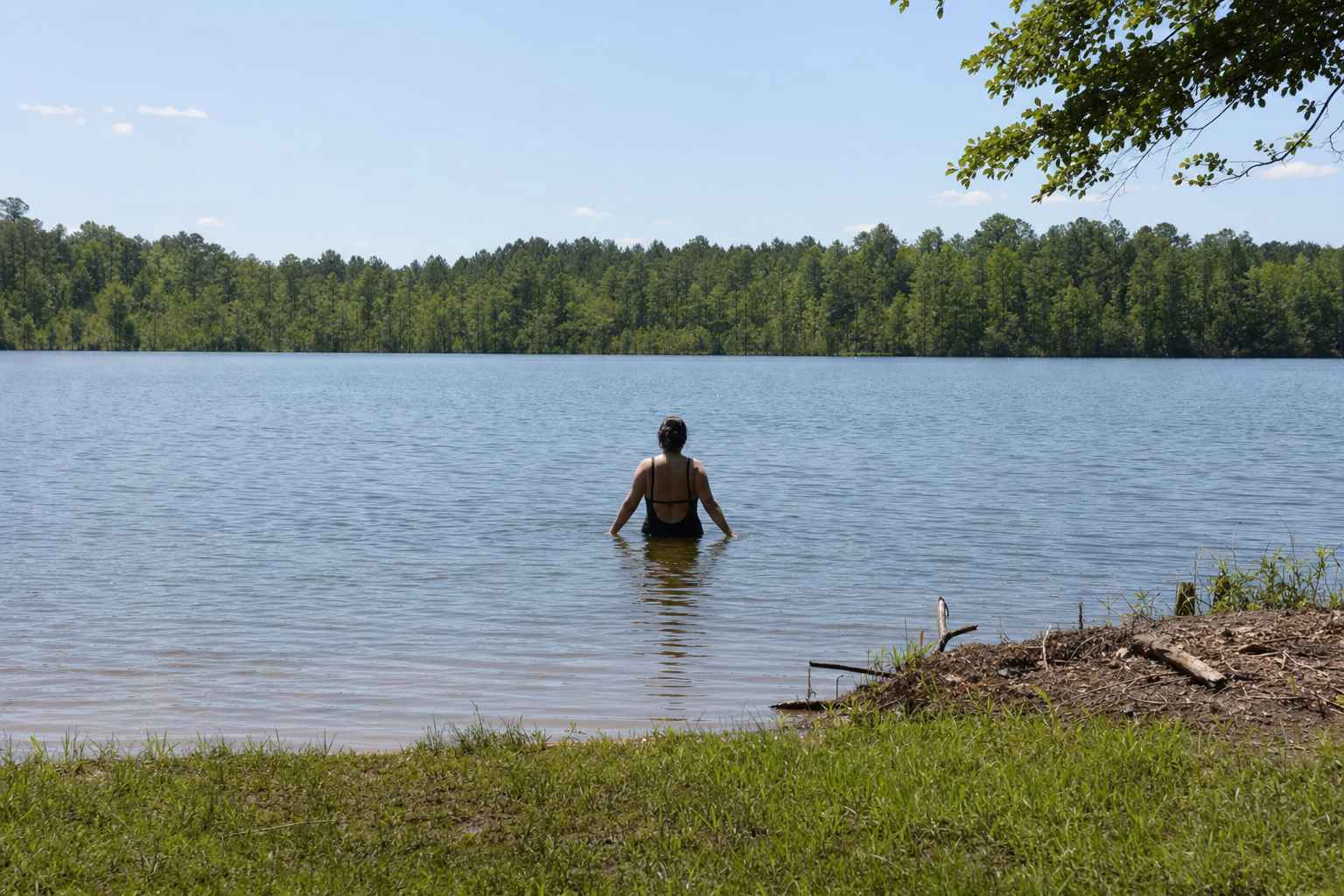

Swimming in a lake isn’t like swimming in a pool. No walls, no lane lines, no clear blue bottom. It catches first-timers off guard.
None of it is a problem once you know what to expect. The water is darker, cooler, and quieter, and that’s normal.
You can’t see the bottom, and that’s okay
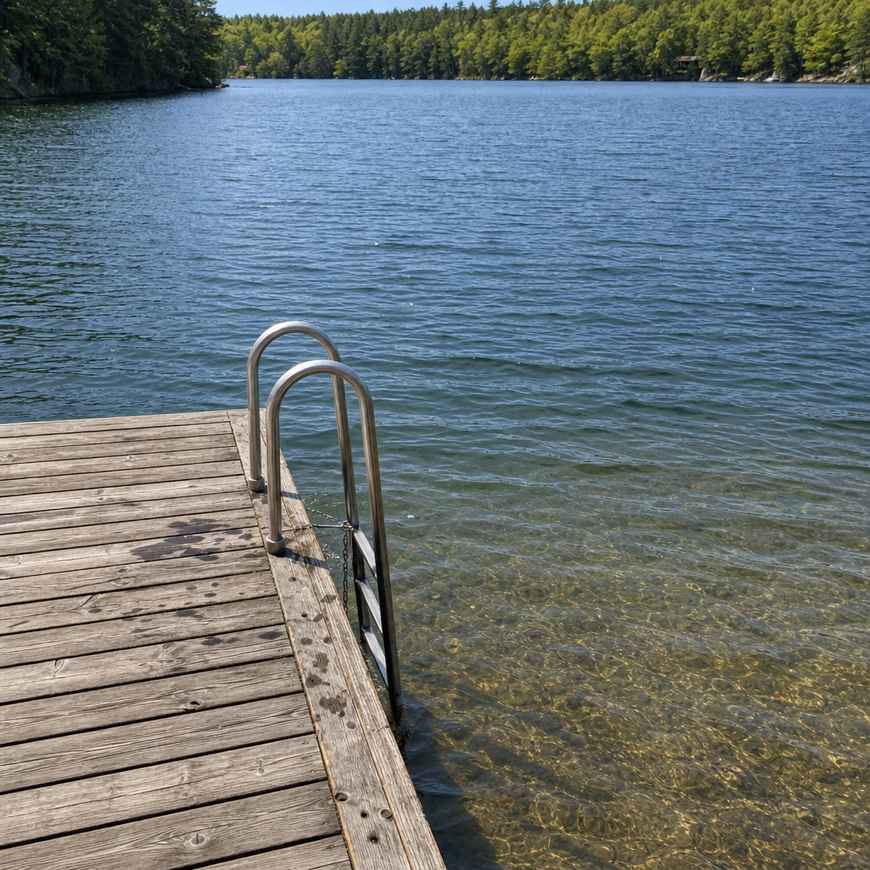
Lake water is rarely clear to the bottom. That’s sediment and natural color, not dirt. Pick a swimming area with a gentle, known entry rather than wading in somewhere random.
It’s colder than it looks
Ease in rather than diving, and give your body a minute to adjust. Lakes are cooler than a heated pool, especially a foot below the surface.
If the water is very cold, your breathing speeds up for a moment. Stay calm, float, and it settles.
Stay where you can stand or near shore
Without walls to grab, swim parallel to the shore rather than straight out. That way you’re always close to a safe exit.
The rest of the small-lake safety basics apply: a life jacket for weaker swimmers, and never swim alone.
Swim where it’s meant for swimming
A marked swimming area is the easiest safe choice. It keeps you away from boat traffic and sudden drop-offs.
Watch for boat lanes and launches, and keep kids in life jackets near the water.
After a swim, a simple lakeside picnic is hard to beat. For the whole day, planning an easy lake day ties it together.