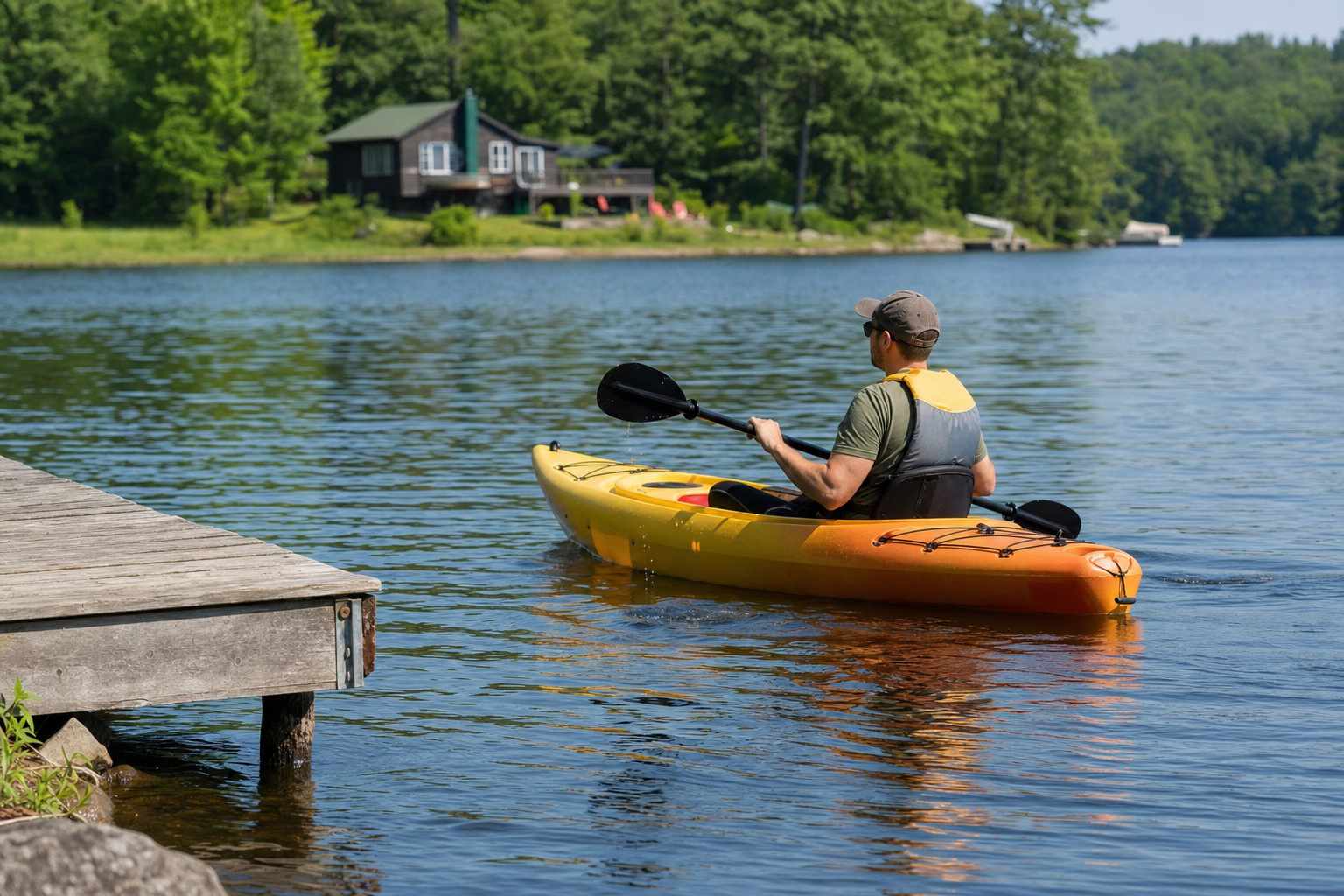

The first time you push off from the dock, the water is closer than you expect. A kayak sits low, and that surprises most first-timers.
There’s a small wobble, then it settles. Within a minute, most people stop gripping the paddle so hard.
It feels tippier than it is, and then it doesn’t. That’s the whole secret of a first time on the water.
You don’t need to be sporty to enjoy this. It does help to lower yourself into the seat and get back up. And the kind of kayak you pick makes that easier or harder.
Past that, it’s simpler than it looks. You can rent a kayak and life jacket in one stop. The rest is just knowing what the first ten minutes feel like.
Renting is the easy way in
For a first time, renting is the simplest path. A local outfitter or lake livery rents kayaks by the hour. The counter hands you a paddle and a life jacket along with the boat.
So the whole kit is sorted in one stop. You don’t need to buy anything to start. You can find out whether you like paddling before you spend a cent on gear.
Borrowing from someone who already paddles works the same way.
Which kayak: sit-on-top or sit-inside?
A rental will usually offer two kinds. A sit-on-top has a shallow seat up on the deck, so you sit higher and out in the open. A sit-inside has an enclosed cockpit that you slot down into, lower and more snug.
Going solo your first time? Ask for a sit-on-top.
You sit higher, and getting on and off is much easier. If you ever tip, you just slide off and climb back on. There’s no cockpit to free yourself from.
A sit-inside keeps you drier and feels sportier. But it’s harder to get into and out of, and it takes more practice.
A sit-on-top is also friendlier if bending down low is tricky, or if you’re carrying some extra weight. You sit on top of the boat instead of wedging into it.
Going with a partner or kids? A tandem kayak seats two, and some seat three with a child in the middle. It keeps everyone in one boat, and it’s an easy way to share a first time on the water.
You might also see canoes on the list. Those are the open, high-sided boats paddled with single-bladed paddles. They’re stable and roomy for two or three, which makes them a comfortable choice for a family. For a solo first outing, a sit-on-top is simpler.
Whichever you rent, check its weight limit. Sit-inside boats are often rated around 250 to 275 pounds, and sit-on-tops usually higher, around 275 to 350 pounds. Pick one rated comfortably above your own weight, so it sits high and steady.
Check the life jacket they hand you
The place you rent from gives you a life jacket. The one job left to you is making sure it fits.
A life jacket that fits is the one thing worth checking every time.
The U.S. Coast Guard recommends wearing a properly fitted life jacket for every paddler. Calm water doesn’t change that.
Fasten it, then tug up on the shoulders. If it rides up around your ears, it’s too big. Ask for a smaller size, or tighten the straps until it stays snug.
Getting in without the drama
Most people overthink getting in. On a sit-on-top, you just sit down onto the deck seat and swing your legs aboard.
Keep your weight low and centered. Sit down before you feel ready to, and let the boat settle. Hold the paddle across the kayak or the dock for balance as you lower in.
The boat is more stable with you in it than it looks from outside. Once you’re sitting, the wobble you felt at the dock mostly disappears.
A few easy strokes
Reach forward, drop the blade in near your feet, and pull back to your hip. Then the other side. Slow and even beats hard and fast.
If you start drifting sideways, a couple of strokes on one side brings you back around. There’s no rush. Drifting for a minute to watch the water is part of the point.
What to bring (and what to skip)
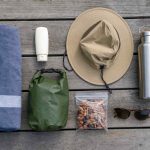
The rental covers the boat, paddle, and life jacket, so your own list is short. Water, sunscreen, and a hat handle most of it. A dry bag keeps your phone and keys safe.
Skip the upgrades for now. A basic rented kayak is plenty for finding out whether you like it. For the rest of the short list, what to pack for a day at the lake has it covered.
One last thing: pick a calm, flat morning
If there’s a single thing that makes a first time easier, it’s this. Calm, flat water is the place to start. Save wind and waves for later.
Early morning is usually the stillest part of the day, before boats and breeze pick up. That makes it the easiest time to learn.
Look for a small, sheltered lake or a quiet cove rather than open water. Stay close to shore for the first outing. If you can see the bottom near the launch, you’re in a good spot.
There’s a moment, a few minutes in, when you stop steering so deliberately and just let the boat sit. The water taps the hull. A heron works the far shoreline. Somewhere a screen door swings shut up at a cabin.
By the time you drift back to the dock, the morning feels two hours longer than it was, in the best way.
That’s what a calm morning on the water gives you. For the bigger picture, planning an easy lake day keeps the whole outing simple, and it’s why people who try it once tend to come back.