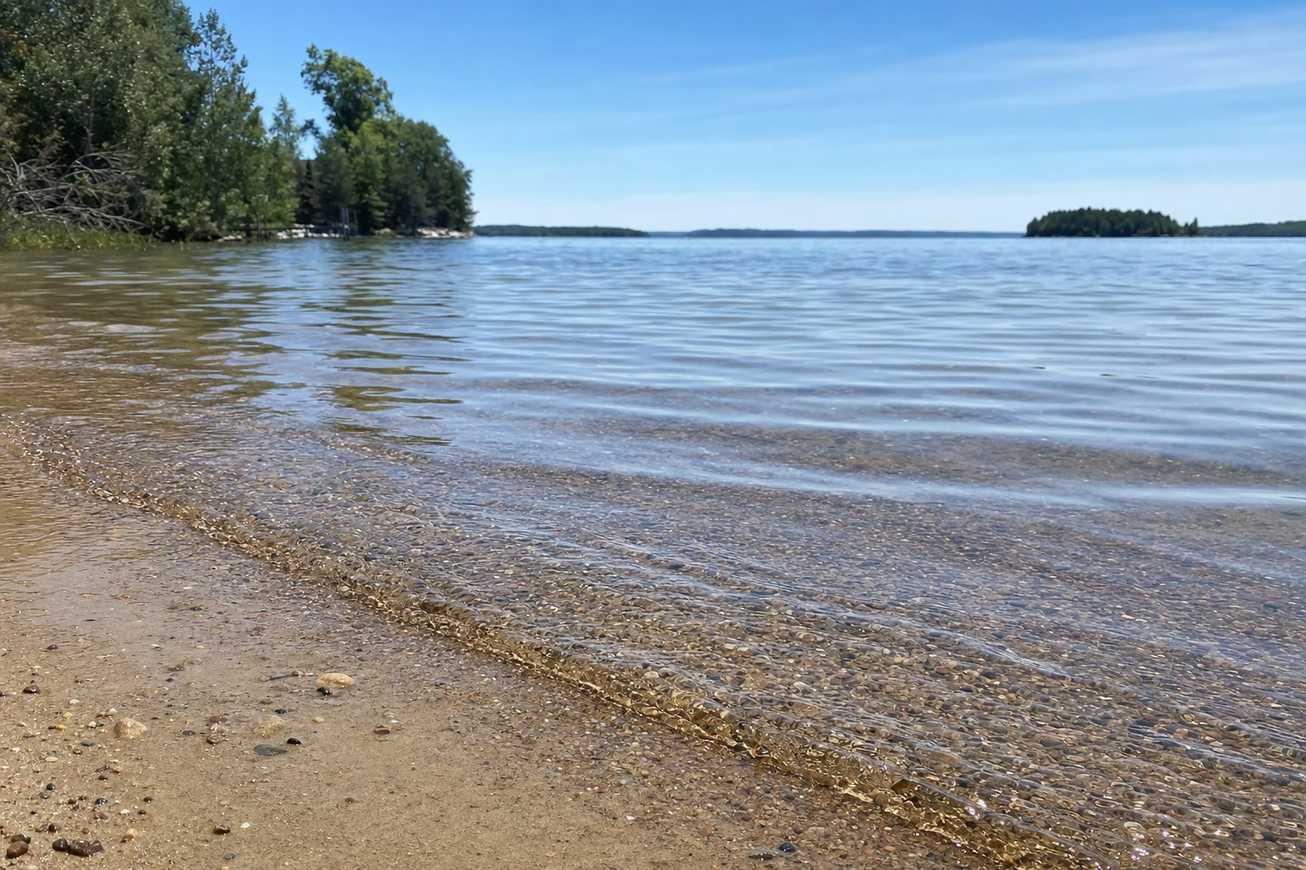

You can tell a lot about whether a lake is safe to swim in before you’re past your ankles. A few quick looks from the shore cover most of it.
Most lakes, most of the time, are perfectly fine for a swim. This isn’t about second-guessing every outing. It’s about the handful of signs worth a glance, because they take about a minute and they head off the things that actually ruin a swim.
Look at the water before you get in
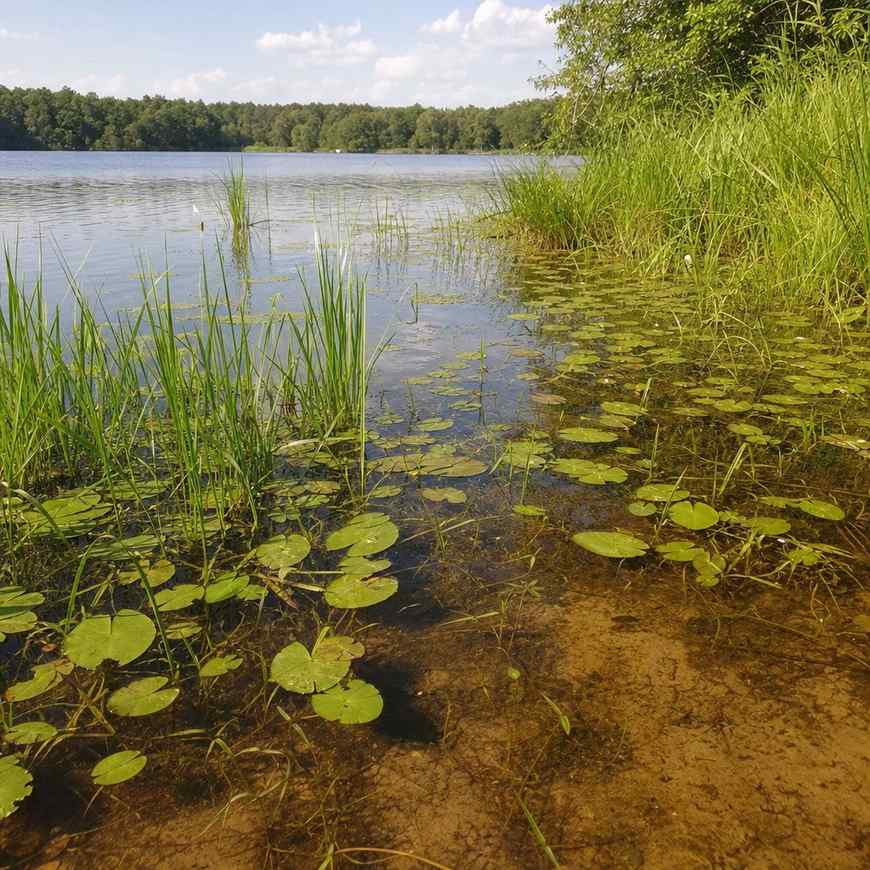
The clearest warning sign is one you can see. According to the CDC, you should stay out of water that looks discolored, has scum on the surface, or smells bad.
That look usually points to a harmful algal bloom, often called blue-green algae or cyanobacteria. It can show up as green or blue-green streaks, a pea-soup tint, or a paint-like film near the shore.
Scummy, discolored, or smelly water is a reason to skip the swim, not a patch to wade through. The EPA’s guidance is to avoid water with visible algal scums, both in the water and along the shoreline.
It’s more serious for kids and dogs
Cyanobacteria can make people sick, and it can be far worse for animals. The CDC notes that a bloom can be deadly for dogs, and advises calling a vet right away if one seems ill after being in or near the water.
If you wouldn’t let the dog drink it, it’s not water for the kids either. Small bodies take in more relative to their size, which is why a lake day with kids is worth a closer look at the water first.
Swimmer’s itch: common, itchy, and usually minor
If you’ve come out of a warm, shallow lake with small red bumps that itch, that’s most likely swimmer’s itch. It’s unpleasant, but it isn’t dangerous.
The CDC explains it’s caused by tiny parasites released by snails, which normally live in ducks, geese, and small shoreline mammals. It isn’t contagious and doesn’t spread from person to person. The bumps can appear anywhere from minutes to days after a swim.
It tends to collect in warm, shallow water near a marshy edge. Swimming in deeper, open water and toweling off as soon as you’re out both help.
Check what’s already being tracked
You’re often not the first to test the water. Through the EPA’s beach program, many states regularly sample popular swim spots and post advisories when bacteria levels climb.
Posted advisories are the easiest check there is, and somebody’s already done the work. Look for signs at the access point, and check your state park or DNR page before you drive out.
A one-minute routine before you swim
Picking the right spot includes picking the water itself.
- Look: discolored water, surface scum, or a bad smell means stay out.
- Check: posted signs and any local advisory.
- Ease in: warm, marshy, shallow edges are where murk and itch gather.
A good day at the water is mostly about packing right and picking the spot.
For the swim itself, lake swimming covers what’s different from a pool, and the lake safety basics still apply once you’re in.