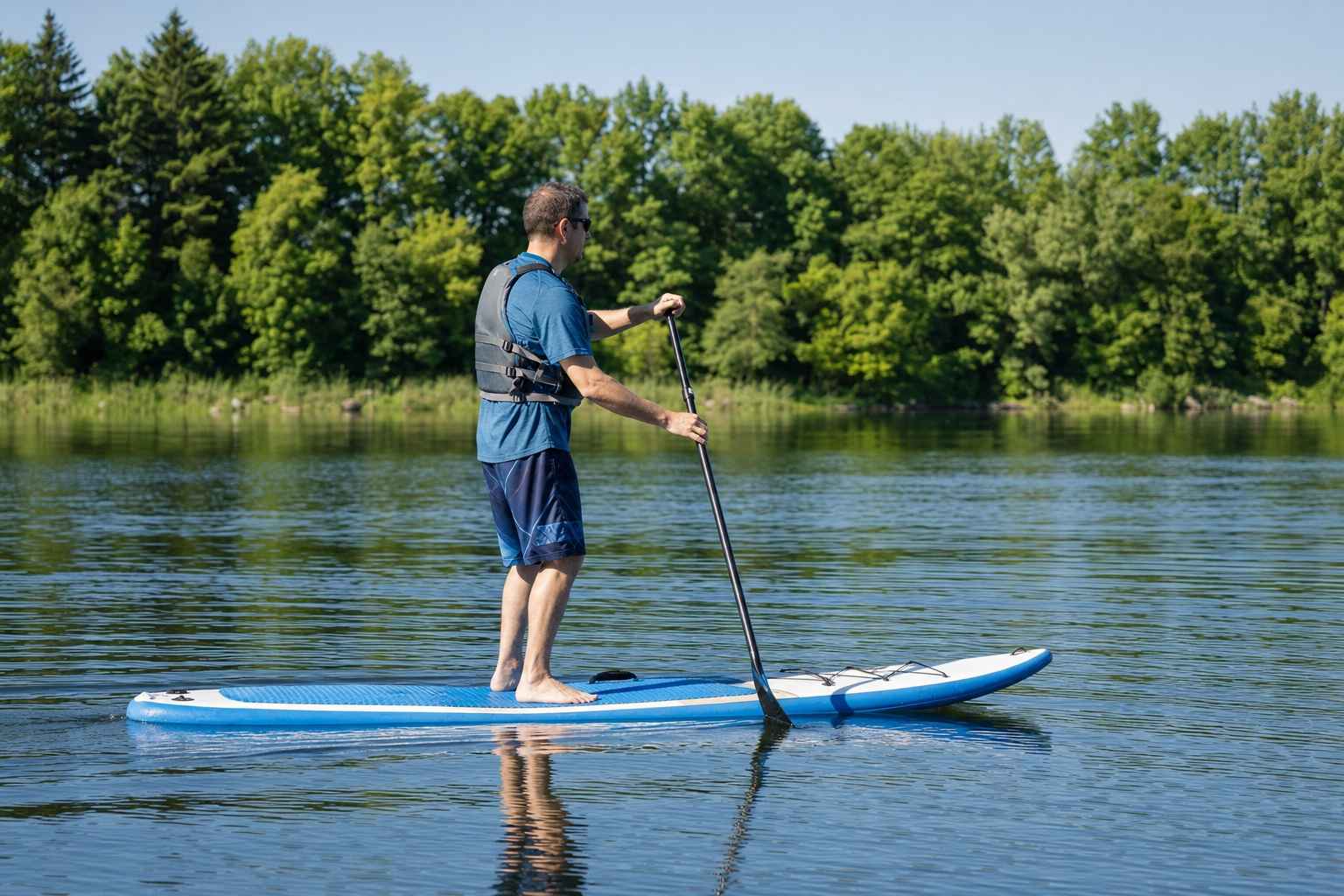

A paddleboard looks harder than it is. Most people picture falling in over and over. On flat water, you spend far less time in the lake than you’d expect.
The first few minutes feel wobbly, then your body sorts it out. Most beginners are standing and gliding within ten minutes.
Start on your knees
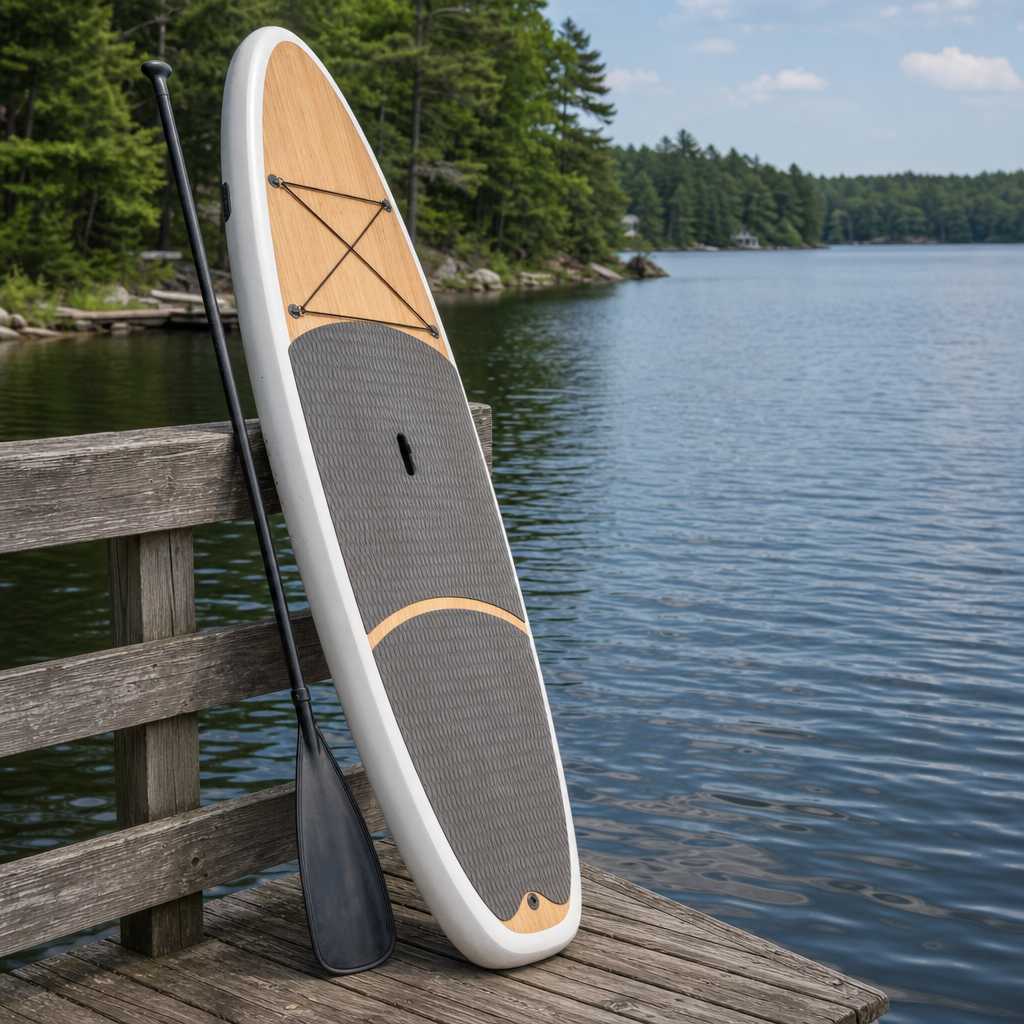
Don’t stand up right away. Kneel in the middle of the board, get a feel for a few paddle strokes, and let the board move under you.
Find your balance kneeling first, then rise one foot at a time. Put your feet where your knees were, about shoulder-width apart.
Rent the board and the gear
You don’t need to own anything. An outfitter rents the board, paddle, and a life jacket together, usually with a quick how-to at the dock.
Ask for a wider, longer board for a first time. A bigger board is far more stable, and stability is the whole game on day one.
If you’ve tried a calm first paddle in a kayak, this is the standing version of the same easy morning.
Pick calm, flat water
Flat water is the place to start. Wind and boat wakes make balance harder, so a still morning on a small lake is ideal.
The basics of staying safe on a small lake apply here too: life jacket on, and stay near shore at first.
Falling in is fine
You’ll probably go in once. It’s part of it, and it doesn’t hurt on flat water.
Climb back on from the side, near the middle, with your weight low. Getting back on is a skill you only need to learn once.
Keep the first session short and close to shore. For the bigger picture of an easy day out, planning a lake day keeps it simple. Once you’re up and gliding, a paddleboard is one of the quietest ways to be on the water.