
No state or local agency monitors or guarantees ice thickness on any lake. According to the Wisconsin Department of Natural Resources, ice safety is the individual’s responsibility, full stop.
That’s the honest answer up front. There’s no such thing as guaranteed-safe ice, only ice that’s less risky than the alternative. If you’re heading out anyway, here’s what actually matters.
Why “It Looked Fine” Doesn’t Mean Much
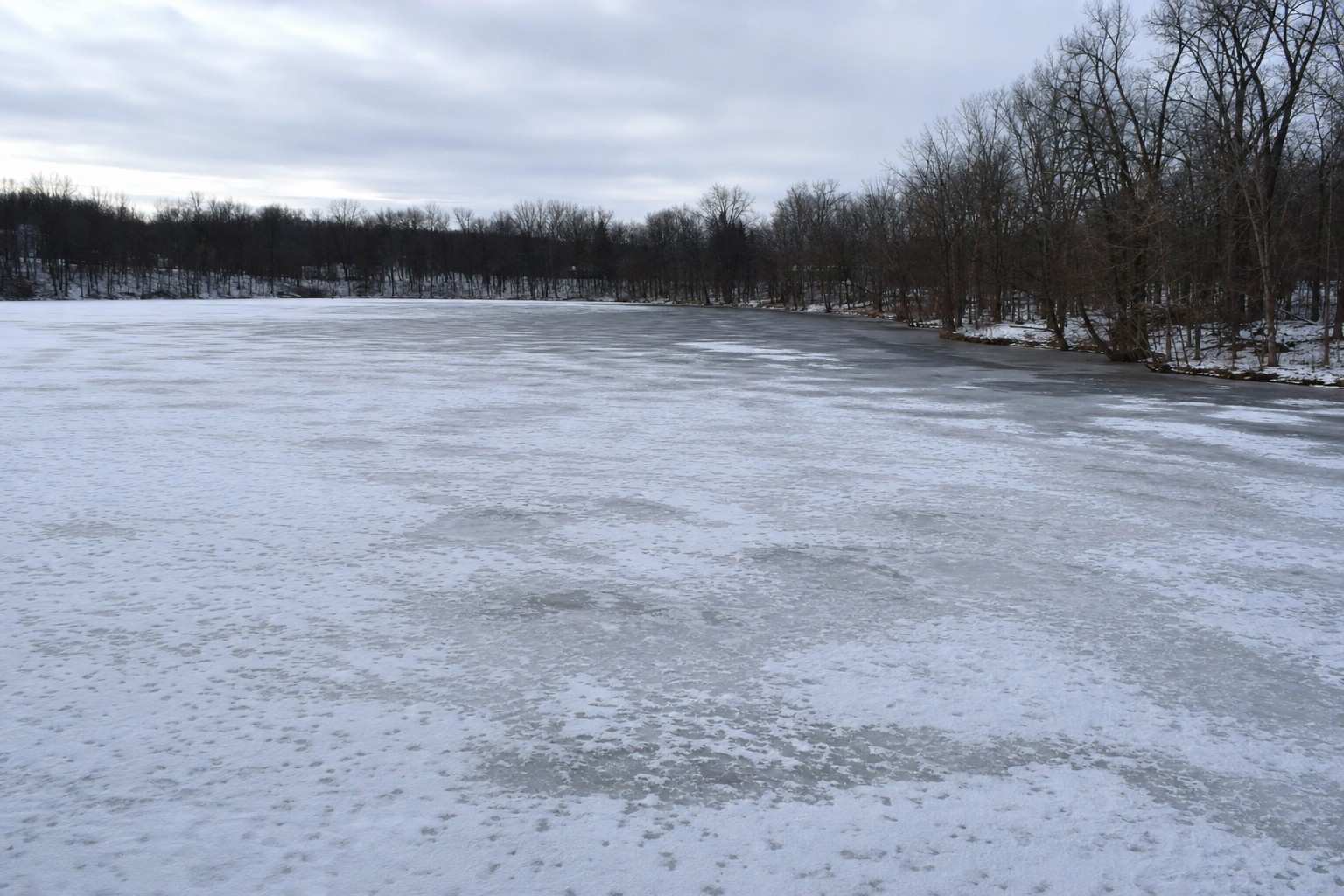
Ice thickness can vary enormously across a single lake. The Wisconsin DNR notes that conditions can shift dramatically even between two spots a short walk apart.
Currents, springs, underwater structures, and inflow or outflow points all weaken ice locally.
A dock piling, a culvert, or a spot where a stream feeds the lake can keep ice thin all winter. The rest of the surface can still look solid.
A thickness reading from one spot tells you almost nothing about the spot fifty feet away.
The Numbers People Actually Use
Ice safety guidelines commonly cite a rough threshold: around 4 inches of new, clear, solid ice can support a person walking. Group activities call for more, often cited around 5 inches.
Two things matter just as much as the number itself.
This guidance only applies to new, clear ice. Old, cloudy, or partially-thawed ice is far weaker even at a greater thickness. White or opaque ice, sometimes called “snow ice,” can be half as strong as clear ice of the same depth.
There’s no way to estimate thickness by looking at it from shore. Checking it means drilling or measuring directly, repeatedly, as you move across the surface, not once near the access point.
What’s Actually Worth Carrying
Gear matters more than most people expect. The Wisconsin DNR recommends two things specifically if you’re going on the ice at all:
- A life jacket worn over your winter clothing. Not packed in a bag. Worn.
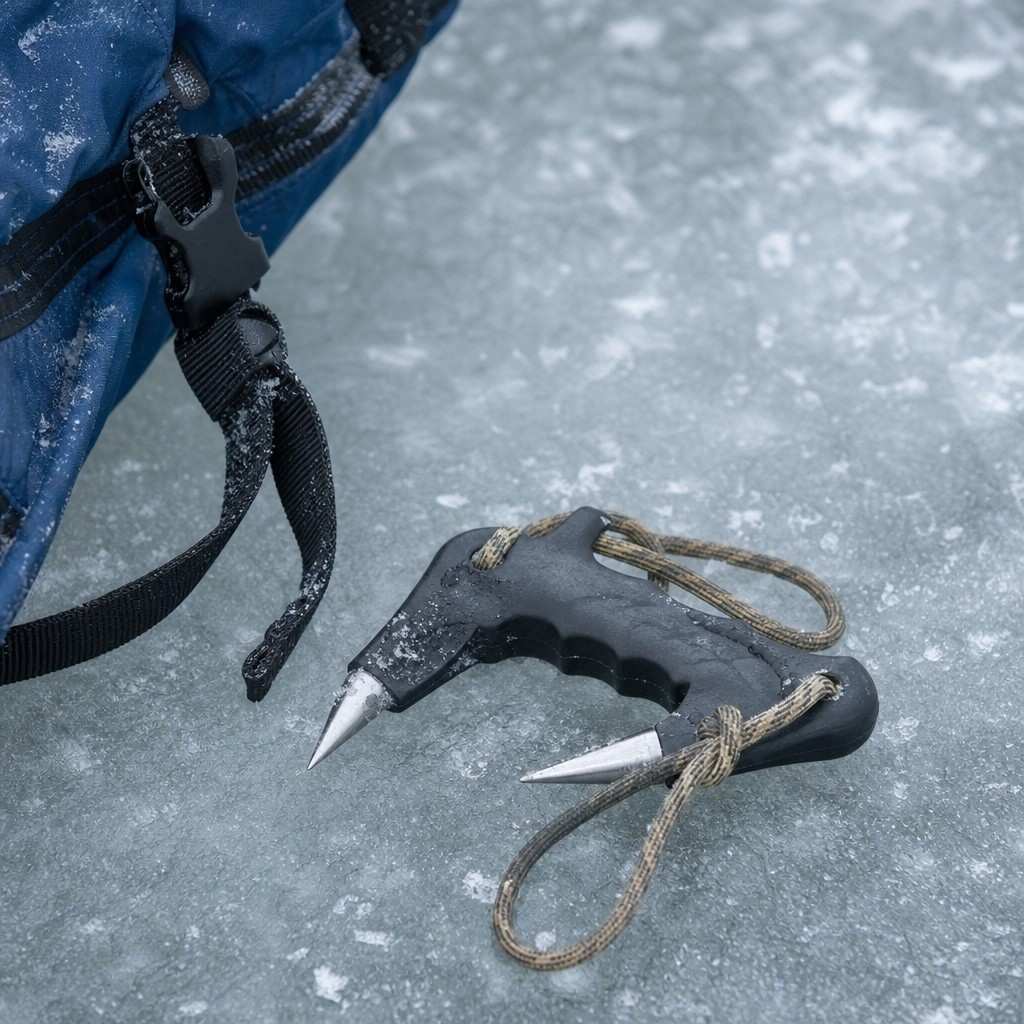
- A set of ice claws or picks kept somewhere you can reach them immediately, not buried in a pocket under layers. You can compare ice claws on Amazon to see the simple options.
That second point echoes a principle that holds for water activities generally. A life jacket that fits is the one thing worth checking every time, on ice as much as in a boat.
If checking your gear before you go feels like overkill, that’s a sign it’s become a habit worth keeping rather than a step to skip.
If Someone Goes Through
Self-rescue technique matters because panic burns the short window you have.
Cold water saps strength fast, an overlap with what’s already true of cold water shock generally.
If you fall through, the general guidance is consistent:
- Stay as calm as you can manage.
- Use ice claws to dig into the solid edge and kick to pull your body up and onto it.
- Roll away from the hole instead of standing, distributing your weight until you’re clearly on solid ice.
Trying to stand right at the break point is one of the more common mistakes. It puts your full weight on the same ice that just failed.
So, Is Any of It Safe?
Not in the way people usually mean “safe.” Ice doesn’t come with a guarantee, not from a thickness chart, not from the agency that manages the lake, not from how it looked last weekend.
What you can do is stack the odds. Check thickness yourself, in multiple spots, every time.
Wear the life jacket. Carry claws where you can reach them. Skip ice that’s anything other than new and clear.
It also helps to know the basics covered in lake safety basics, the kind of groundwork that applies to lake activity generally, not just ice.
If you’re combining an ice outing with a longer day at the lake, the same planning habits behind an easy lake day still apply.
Worth checking, too, who actually controls access to that stretch of shoreline before you park and walk out. Shoreline ownership and access rules vary more than people expect.
If checking all of this before you go starts to feel like more work than the outing is worth, that’s worth listening to. If it stops being relaxing, you’ve over-planned it, and on ice, that instinct is also a safety signal, not just a comfort one.